HVAC Maintenance
Tune It Up in Spring. Sleep Through Summer.
Almost every emergency breakdown we run in July was visible in March. Preventative maintenance is the cheapest HVAC money a Phoenix homeowner spends.
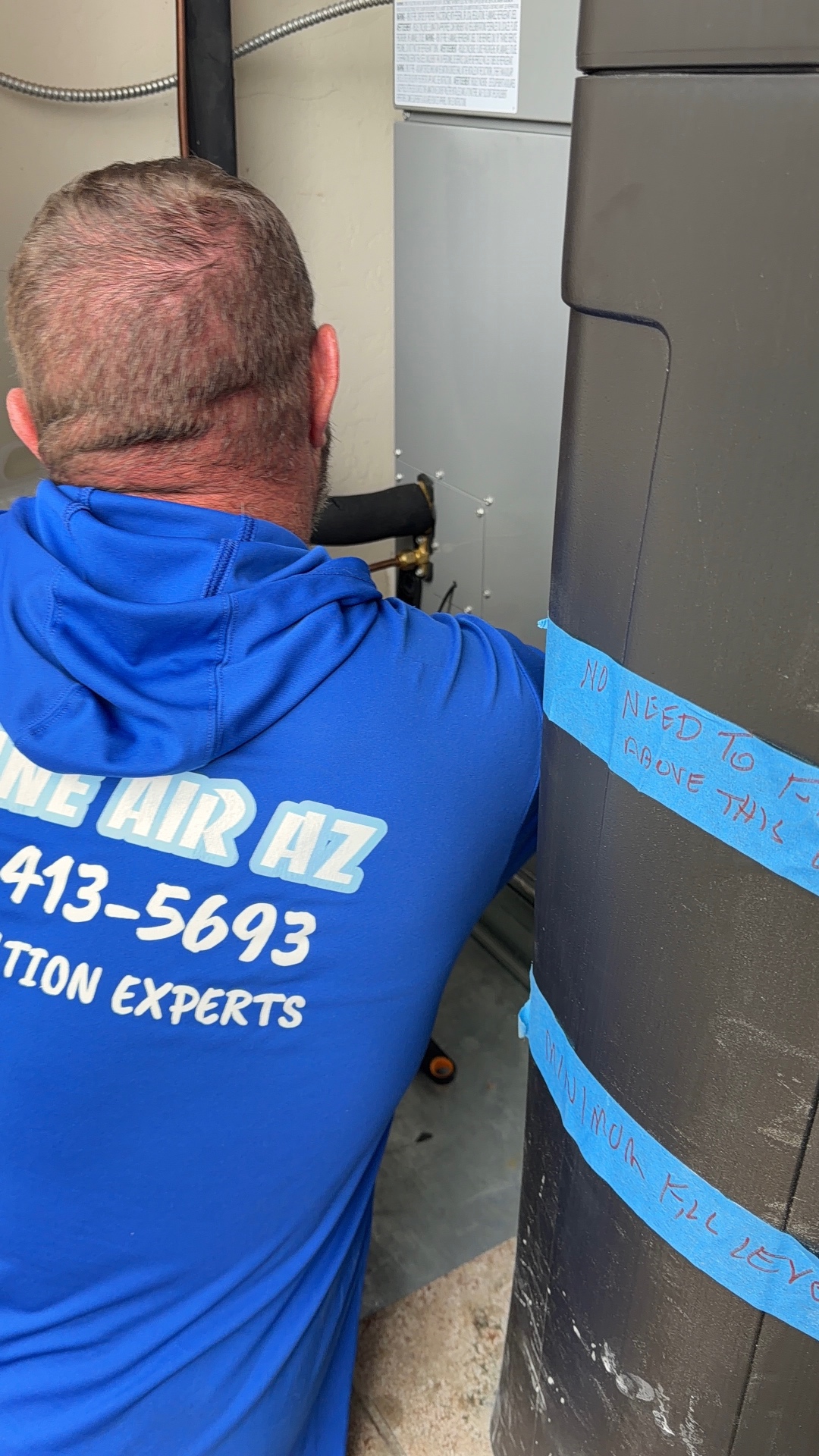
What Phoenix Heat Does to an HVAC System
From May to September a Valley air conditioner runs more hours in one season than a system in most of the country runs in two years. Capacitors dry out, contactors pit, motor bearings dry, refrigerant leaks widen, and coils pack with dust from open desert, construction and monsoon storms.
None of that is sudden. It's measurable months in advance — a capacitor reading below tolerance, an amp draw creeping up, a temperature split narrowing year over year. That's exactly what a real tune-up catches.
- Condenser coil wash — the single biggest efficiency gain on most systems
- Capacitor, contactor and motor amp testing with recorded readings
- Drain line clearing so a float switch doesn't shut you down in August
- Refrigerant charge verification and leak inspection
- Thermostat calibration and airflow check at the registers
The Insane Air Maintenance Plan
Two scheduled visits a year — cooling in spring, heating or heat pump in fall — plus front-of-line dispatch during heat waves, a standing discount on any repair, no diagnostic fee, and a documented service record that keeps your equipment warranty valid.
We schedule you automatically and remind you, because the whole point is not having to remember in March.
Simple Things That Save Valley Homeowners Money
Change filters on a calendar, not when you notice. Keep shrubs and gravel clear of the condenser by two feet. Rinse the outdoor coil gently in spring. Set the thermostat to a steady temperature rather than swinging it 10 degrees during peak hours — a Phoenix system that has to recover 10 degrees at 5pm works far harder than one holding steady.
Do those four things and add an annual professional tune-up, and you'll typically add years to the life of the system.
Common Questions
Before You Call
Book Your Pre-Summer Tune-Up.
Two visits a year, priority scheduling, and a system that's ready before the first 110-degree week.
Open 7 days • 6am – 9pm • 24/7 emergency dispatch